
Home > Blog > Music > Music Technology
Disclosure: Some of the links below are affiliate links, meaning that at no additional cost to you, we will receive a commission if you click through and make a purchase. Read our full affiliate disclosure here.
Picture yourself on the couch, lights dimmed, and suddenly the rumble of a jet engine sweeps right over your head—or maybe you catch the faintest creak of someone sneaking up behind you. That’s the magic of surround sound technology. It provides a three-dimensional sound that makes every detail feel real. It can turn a plain old movie night into a full home cinema experience. These days, with spatial, immersive, and 3D audio in the mix, movies really do seem to leap off the screen. This level of engagement is what makes modern theater systems so popular.
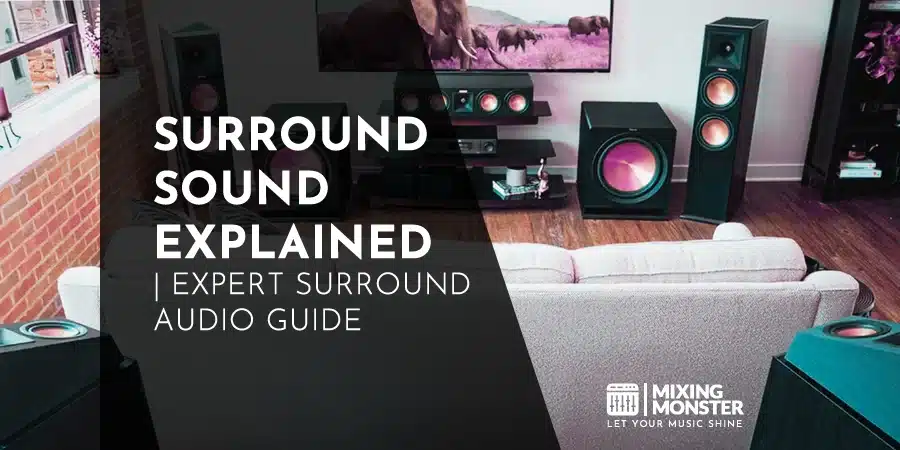
Surround sound systems use several speakers—carefully placed around your room—to create a genuinely three-dimensional audio space. You end up hearing sounds from all directions, which makes it feel authentic. Most home theater systems stick with five satellite speakers and a subwoofer—that’s a 5.1 surround-sound setup. Each speaker has its own job in the soundscape. That way, dialogue, music, and effects fill the space naturally.
It’s a massive leap from basic stereo sound, honestly. While stereo sound relies on just two points of origin, multichannel systems wrap the audio around you. By using binaural cues, these systems mimic how we hear things in the real world.
Surround sound isn’t just for movie buffs anymore. It’s crept into gaming, pro-level audio production, and even VR. From old-school stereo to cutting-edge Dolby Atmos, the tech keeps getting better, giving regular folks a shot at seriously lifelike sound.
KEY TAKEAWAYS:
- Surround sound pulls you in with audio from all around, thanks to speaker placement
- Plenty of configuration options—there’s something for every space and budget
- It’s not just for movies: gaming, VR, and pro audio all use surround sound these days
Table Of Contents
1. What Is Surround Sound: Understanding The Basics
2. How Surround Sound Technology Works
3. Popular Surround Sound Formats And Types
4. Applications Of Surround Sound
5. Surround Sound In Audio Engineering
6. Choosing The Right Surround Sound System
7. Key Takeaways Of Surround Sound
FAQ

1. What Is Surround Sound: Understanding The Basics
Surround sound is all about making audio feel bigger and more real by spreading it out across multiple speakers. When you set things up right, you get precise audio placement and richer sound—suddenly, your living room feels a bit like a cinema.
Surround Sound Definition And Core Concepts
Surround sound systems create a sense of realism by sending audio from different directions, just as our ears do in real life. This whole 3D effect depends on the timing and direction of sound hitting your ears.
The system splits audio into separate channels, so different speakers handle different sounds. The surround channels are specifically designed to provide ambient noise and off-screen effects.
Most setups you’ll run into are 5.1 or 7.1. The first number is the speakers, and the “.1” is the subwoofer for those big booms.
Here’s how the speakers usually break down:
- Center channel: mainly voices and dialogue
- Front left/right: main music and effects
- Rear/surrounds: background and atmospheric stuff
- Subwoofer: all about that bass

Evolution Of Surround Sound Technology
Back in the day, audio meant simple stereo—just two channels. It was fine, but it didn’t exactly blow anyone’s mind. Eventually, we got more channels and, well, things got interesting.
The jump to 6.1 surround was a big deal at the time. This paved the way for today’s 7.1 and high-end 5.1 surround sound configurations. Modern listeners now enjoy these alongside wild object-based formats. Even the best soundbars now incorporate advanced surround sound capabilities for a more realistic listening experience.
Now, you’ve got spatial audio formats like:
- Dolby Atmos
- DTS:X
- Auro-3D
These add sound from above and let you pinpoint exactly where things are happening.
Key Components Of A Surround System
You’ll need three main ingredients for a proper surround sound setup:
- AV receiver or processor (the brains of the operation)
- Speaker array—yep, multiple speakers
- Audio content that’s actually mixed for surround (otherwise, what’s the point?)
Your receiver decodes all the fancy audio formats and sends the right sounds to the right speakers. And, of course, speaker placement matters—a lot.
Don’t forget calibration. Getting the levels and timing right is what makes the whole thing click.
Benefits Of Surround Over Traditional Stereo
Surround sound feels more real. It gives you proper spatial cues, so your brain actually knows where sounds are coming from. Stereo can’t really compete here.
Some perks you’ll notice:
- Better dialogue clarity thanks to the center channel
- Pinpoint accuracy for where sounds appear in the room
- Wider dynamic range—each speaker has its own job
- Richer, deeper bass with a dedicated subwoofer
With all those speakers working together, you really can hear sound moving around you, just as the creators intended.

2. How Surround Sound Technology Works
Today’s surround systems pull off their magic with the correct speaker setup, careful placement, and some intelligent signal processing. The idea is to send the right sounds to the right spots, so you feel like you’re in the middle of the action.
Sound Channel Configuration
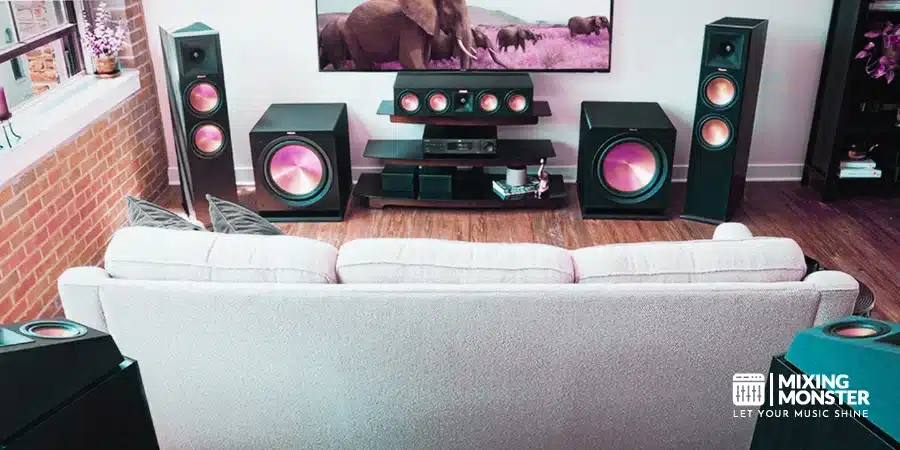
Your classic setup is 5.1-channel audio: five speakers and one subwoofer—the centers for dialogue, simple as that.
The front left and right speakers deliver the main stereo image and handle most of the music.
Rear surrounds handle background effects and anything sneaking up from behind.
The “.1” is the subwoofer, which handles anything below 120 Hz—those deep rumbles.
Step up to 7.1, and you’re adding two more side speakers for even more realism and a wider soundstage. Want to get fancy? Try 5.1.2, which adds two height channels, or go all-in with 7.1.4 to get four height speakers.
Now you’re talking true 3D sound—stuff can literally move above your head. These setups use spatial audio to let you place sounds almost anywhere in the room. This creates a much more immersive sound experience than traditional layouts.
Surround Speaker Placement And Setup
Center speaker? Stick it right above or below your TV, at ear level if you can.
Front left and right should sit at about a 60-degree angle from where you’re sitting, and try to keep ’em the same distance away.
Surrounds work best above ear level, either on the sides or behind you. Some folks use up-firing speakers that bounce sound off the ceiling for those height effects—handy if you don’t want to drill holes.
Subwoofer placement can be weirdly tricky. Try a few spots to find where the bass sounds best.
Don’t skip calibrating speaker distances in the receiver. It’ll make sure sounds hit your ears at the right moment.
Surround Audio Signal Processing
Object-based surround formats (think Dolby Atmos) treat sounds like little audio “objects” that can move anywhere in 3D space.
Digital processors figure out where everything should go. If you don’t have space for a full setup, virtual surround sound can simulate a wider soundstage with clever algorithms. This technology provides an immersive feeling without a room full of gear.
Some systems even analyze your room and tweak the sound to fit—pretty wild, honestly.
With advanced processing, you can get “phantom” speakers that make it sound like there are more speakers than there actually are. Modern receivers with Dolby Audio can even make old-school content sound surprisingly lush.
Digital Vs. Analog Surround Sound
Digital surround means each channel is separate, with formats like Dolby Digital and DTS keeping everything crisp and controlled.
Analog surround is more old-school, using matrix tricks to squeeze extra channels from just two.
Digital’s the clear winner for channel separation and overall sound quality.
Most receivers these days handle both, but if you want the best, stick with digital and lossless codecs.

3. Popular Surround Sound Formats And Types
There’s no shortage of surround sound formats. Each one’s designed to make the most of speaker placement and smart signal processing to pull you into the action.
Dolby Digital And DTS Systems
Dolby Digital and DTS are the big dogs—if you’ve watched a movie in a theater or at home, you’ve probably heard one or the other. Both crank out high-quality multichannel audio.
Dolby Digital goes up to six channels and is everywhere—DVDs, streaming, you name it.
DTS supports higher bitrates to deliver more detail. There’s DTS Digital Surround, DTS-HD Master Audio, and a few others.
Dolby TrueHD is for the purists: lossless audio that’s identical to the studio master. If you care about every nuance, that’s the one to chase.
5.1 Vs. 7.1 Configurations
The 5.1 surround format means five speakers and a sub. You’ve got front left, center, front right, rear left, and rear right. This 5.1 surround configuration is the most common entry point for high-quality home audio.
7.1 adds two more rear speakers, so you get an even fuller sound bubble around you.
For 5.1 placement:
- Center: dead ahead (0°)
- Front L/R: about 30° out from center
- Surround L/R: roughly 110°
- Subwoofer: wherever it sounds best
In 7.1, you pop the extra surrounds at around 150°. Hardcore fans sometimes go for 7.1.4 for that all-encompassing, hemisphere-of-sound effect.
Object-Based Audio Formats
Dolby Atmos really changes the game with its height channels and object-based audio positioning. Instead of just sticking sounds to specific channels, Atmos lets sound objects float around in three-dimensional space. It’s wild to hear something move above your head for the first time.
DTS:X does a lot of the same, but it doesn’t force you into a particular speaker setup. It figures out what you already have and works with it, which is handy if you don’t want to overhaul your whole room.
Both of these formats can use ceiling-mounted or upward-firing speakers for those height effects. So if you’re after that “sound raining down from above” vibe, that’s the way to go.
360 Spatial Sound Mapping is another cool bit of tech—it lets you place sound just about anywhere in your listening space with surprising accuracy.

Latest Innovations In Surround Technology
Virtual surround processing is getting better all the time. Now, you can get a pretty immersive experience with way fewer speakers, thanks to some clever digital signal processing under the hood.
AI-driven room correction is popping up everywhere, too. These systems listen to your space, identify the weird acoustic quirks, and automatically tweak your speakers. It sounds like magic, but it really works.
Streaming services are jumping on board with advanced formats like Dolby Atmos and DTS. It’s making immersive sound much more accessible to everyone, not just audiophiles with deep pockets.
A wireless surround sound system is a lifesaver if you hate cable spaghetti. It offers easy installation while keeping the living room looking neat and organized. The latest wireless speakers are surprisingly good—sometimes you’d be hard-pressed to tell the difference from wired setups.
Many bundles even include a wireless subwoofer and wireless rear speakers, so you can place them wherever you want. The result? Deep bass, clear surround, and a setup that doesn’t make you want to pull your hair out.

4. Applications Of Surround Sound
Surround sound systems really do amp up audio in all sorts of places. They create these immersive, multi-layered soundscapes that put you right in the middle of the action. Nowadays, you’ll see setups ranging from basic 5.1 rigs to monster systems with a dozen or more speakers.
Home Theater Systems
Home theater setups are all about bringing that cinema feeling home. They try to deliver crisp, enveloping sound from every direction. The classic setup is 5.1: three up front, two in the back, and a subwoofer for the rumble.
If you go up to 7.1, you’ll get two extra rear speakers, which really helps in bigger rooms where sound needs to stretch out more.
Most modern receivers handle formats like Dolby Atmos and DTS, so you can even get overhead effects with ceiling or upward-firing speakers if you’re feeling ambitious.
Room acoustics can make or break your setup. Where you put the speakers and how you treat the room (think rugs, curtains, panels) can reduce weird echoes and make everything sound clearer.

Gaming And Virtual Reality
Gamers get a lot out of surround sound—being able to pinpoint where a sound is coming from can mean the difference between winning and losing. Directional audio cues help spot enemies, dodge threats, and just get lost in the game world.
Virtual reality takes it up a notch by combining head-tracking with surround-sound processing. So as you move your head, the sound shifts in real time. It’s pretty trippy the first time you try it.
Most new consoles and gaming PCs support surround sound formats, whether you’re using headphones with binaural audio or a full-room setup. Options abound.
Professional Audio Production
Recording studios lean on surround monitoring for everything from film scores to game audio design and immersive music. Engineers juggle multiple speakers to get the placement and balance just right.
Post-production spots use calibrated surround rigs to mix and master for a wide range of formats and playback situations.
QC rooms (quality control) have reference-grade surround systems to double-check that mixes work everywhere, not just in the studio.
Live Events And Venues
Concert halls go big with distributed speaker arrays, making sure everyone gets the same sound, no matter where they’re sitting. Line arrays help steer the sound where it should go and cut down on echoes bouncing all over.
Sports arenas use surround setups to pump up the crowd and make announcements feel larger than life.
Theaters are super picky about sound, calibrating surround systems so every seat gets the goods. Multiple speaker zones allow them to tweak levels and positioning for different parts of the venue.

5. Surround Sound In Audio Engineering
Surround sound engineering is an art and a science. It’s about using specialized tools and techniques to build immersive audio for film, games, or music. The pros set up complex channel layouts and routing tricks to make everything feel like it’s coming from the right spot.
Mixing Techniques For Surround
Sound designers spread different audio elements across 5.1 or 7.1 speaker setups to add depth and movement. You’ll usually hear background ambience in the rear, while dialogue stays locked in the center.
Dynamic panning is used for stuff like cars zooming by or ambient noises floating around. Keeping levels steady across all channels is tricky, but it’s key—otherwise, you end up with weird hotspots.
Key mixing considerations:
- Front-to-back balance
- Left-right stereo imaging
- Center channel clarity
- LFE management for bass
Surround Channel Management And Routing
Professional DAWs need proper output routing for all those separate channels. Each speaker gets its own audio stream, usually piped through the mixing console or interface.
Sound effects and music are sent to different speaker combos, depending on where they belong in the space. Reverb sends often go to every speaker to wrap the room in ambience.
Standard routing practices:
- Dialog → Center channel
- Music → Left/Right/Surround
- Effects → All channels as needed
- LFE → Bass management system
Common Challenges And Solutions
Phase issues between channels are a real headache—if you’re not careful, you can end up with sounds cancelling each other out. Regularly checking your surround monitors helps keep spatial placement accurate.
Level matching is another biggie. You want everything balanced, so engineers rely on calibrated monitors and meters to keep things in check.
Bass management can get messy. Too much LFE, and you’ll swamp the mix. High-pass filtering the main channels helps keep the low-end under control.
Professional Tools And Software
Pro Tools is the go-to for surround work, with deep channel support and automation. There are also specialized plugins for surround panning and room simulation—super helpful in dialing in that immersive feel.
Hardware controllers give you hands-on control of where sounds sit in space. And of course, calibrated monitors are a must if you want accurate playback.
Essential tools:
- Surround panning plugins
- Multi-channel EQ
- Spatial reverb processors
- Bass management systems
- Channel routing matrices
6. Choosing The Right Surround Sound System
Picking out a surround system isn’t just about grabbing the fanciest box on the shelf. You’ve got to juggle your budget, the quirks of your room, technical compatibility, and setting it all up right.
Budget Considerations
Basic 5.1 systems start at around $300, but if you want something like the Samsung HW-Q990B or Sonos Arc Ultra, you could be looking at $1,500 or more.
Soundbars are a solid budget option. They simulate the surround well now, and you don’t have to deal with a bunch of speakers. Finding the best soundbar for your space usually depends on how its drivers are arranged to bounce audio.
Many top models use spatial audio to expand the soundstage. Many high-end units now include a wireless subwoofer to deliver deep bass for those cinematic rumbles. This allows for a clean setup without sacrificing impact.
Living in a small apartment? A compact soundbar can deliver clear dialogue without eating up precious floor space. Many top soundbars these days even throw in wireless subs and innovative features like Alexa.
If you want more, speaker bundles from Q Acoustics, DALI Oberon, or Wharfedale Diamond offer great value in the $500–$1,000 range.

Room Size And Acoustics
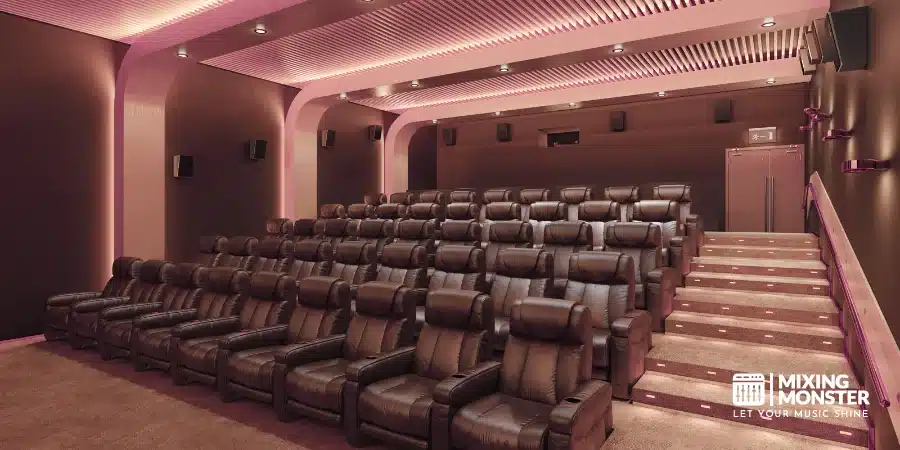
Small rooms (under 200 sq ft) are perfect for compact 5.1 setups: five speakers and a subwoofer, done.
Bigger rooms? You’ll want 7.1 or even 9.1, with more rear speakers to fill the space.
The shape of your room matters more than most people think. Square rooms can be tricky for acoustics, while rectangles usually spread sound better.
Hard surfaces bounce sound, soft stuff like carpets and couches soak it up. Adding some acoustic panels here and there can make a noticeable difference.
Component Compatibility
Make sure your system matches your TV. 4K and 8K TVs really want HDMI 2.1 for the best results.
Wireless setups like the JBL Bar 9.1 or Sony Bravia Theater Quad get rid of cable clutter, but they do need a solid Wi-Fi connection.
If you want smart features (like Google Assistant), double-check that your gear plays nice together and that your internet won’t let you down.
HDMI eARC is a must for the latest audio formats like Dolby Atmos—just one cable, no fuss.

Installation Best Practices
Front speakers should be at ear height when you’re sitting down, making a triangle with your seat. Simple, but it works.
The center channel? Stick it right above or below your TV.
Surround speakers are above ear level, mounted on the sides or back walls.
The subwoofer is a bit of a wild card—you’ll want to try a few spots to see where the bass sounds smoothest.
And yeah, cable management is worth the effort. Hiding wires makes everything look way cleaner.
7. Key Takeaways Of Surround Sound
Multiple channels and smart speaker placement deliver a whole 360-degree sound field. It’s a huge leap from basic stereo, which is really just left and right.
A typical 5.1 surround sound setup includes front left/right channels, a center channel, surround left/right channels, and a subwoofer for low-end punch.
Room size and shape matter more than you’d think. Rectangular rooms that are about 1.5 to 2 times as long as they are wide usually sound best for surround setups.
Square or oddly shaped rooms can cause sound to bounce in unexpected ways, disrupting the experience. In those cases, getting your speaker placement right is even more critical.
7.1 systems toss in two more rear speakers, which makes the sound field even more convincing and immersive.
The center channel is where most dialogue lives, so if you want clear speech in movies or TV, don’t skimp on it. Surround speakers mostly handle the background and ambient stuff.
How your room is laid out really affects how well your system works. Open floor plans might not give you the same surround effect as a closed-off viewing room.
Happy Surround Sound Listening!

FAQ
1) How does a surround sound system enhance the audio experience?
Surround sound systems really pull you in by putting speakers all around your space. Instead of sound coming from just the front, you get this 3D effect that puts you smack in the middle of whatever you’re watching or listening to.
With multiple speakers, you get those cool directional effects—like, you can actually hear something move from one side of the room to the other. Each speaker handles its own part of the soundtrack, so everything feels more alive, whether it’s a movie, a game, or just music.
2) What is the difference between 5.1 and 7.1 surround sound systems?
A 5.1 setup means five main speakers and a subwoofer—three up front, two behind you. For most rooms, that’s more than enough to get that surround vibe.
But if you go for 7.1, you’re adding two extra speakers at the back. It’s more immersive, especially if your room’s on the bigger side. You get a more detailed sound behind you.
3) What should be considered when setting up surround sound speakers in a room?
Where you put your speakers matters a lot. The angles, how far they are from you, all that stuff—it can make or break your sound. And let’s not forget, couches, rugs, and even the walls mess with how sound bounces around.
Try to get the speaker height and direction lined up with where you’ll actually sit. Different wall types and room shapes can change how sound gets absorbed or reflected, so sometimes you have to play around with placement.
4) How do soundbars compare to traditional surround sound systems?
Some soundbars these days, like the Sennheiser Ambeo, use some wild tech to fake surround sound. When searching for the best soundbar, you will see that a top-notch Dolby Atmos soundbar can even get you a 5.1.2 setup just by bouncing sound around the room.
They’re way easier to set up and don’t take up much space, which is a huge plus if you’re not into running wires everywhere. Some even come with little satellite speakers, so you get closer to a real surround feel—definitely better than old-school stereo.
Still, traditional systems have the edge if you want pinpoint sound direction and cleaner separation. Plus, you can tweak them however you like, which is half the fun for some folks.
5) What is the importance of subwoofers in a surround sound setup?
Subwoofers are the unsung heroes—they handle those deep rumbles and bass drops that regular speakers can’t do justice. If you want to feel explosions or the thump of a bassline, you really need one.
Where you put the subwoofer makes a big difference, too.
The right spot gives you punchy bass without weird echoes or boomy spots. Some people even go with two subs for smoother bass all over the room, though that’s a bit much for the average setup.
6) Can surround sound systems be integrated with smart TVs?
Hooking up a modern surround sound system to a smart TV isn’t that hard—most of them use HDMI ARC or an optical cable. Receivers these days usually have a bunch of HDMI inputs so that you can plug in all your devices without much hassle.
Streaming apps on smart TVs also support multichannel audio. And if you’re into voice controls, many of these setups will play nice with your smart home devices, making it super easy to tweak the sound or switch things up with just a command.
Related Articles





Featured


You Might Also Be Interested In