Home > Blog > Studio Gear > Recording Gear

Disclosure: Some of the links below are affiliate links, meaning that at no additional cost to you, we will receive a commission if you click through and make a purchase. Read our full affiliate disclosure here.
Voice processors have become go-to tools for musicians, podcasters, and creators who want to shape their sound. They give you more control and polish than just relying on raw vocals.
A voice processor is a device that tweaks, enhances, or fixes vocals in real time or after recording. These units can add effects like reverb, delay, and harmonies, and they handle pitch correction and compression too. The most important factors to consider when choosing the best voice processors are sound quality, ease of use, compatibility with your setup, and the specific features you need.
Some models are perfect for live shows, while others shine in studio recording or streaming setups. We checked out a bunch of the top models to see which ones nail that balance of performance, reliability, and value.
Below, you’ll find our favorites, plus some quick notes on how voice processors work and what to look for when buying.
KEYNOTES:
- In this article, you’ll find a comprehensive list of the best voice processors on the market.
- Voice processors are categorized into 3 sections:
Best Budget Voice Processors
Best Midrange Voice Processors
Best High-End Voice Processors - Each section contains:
3-4 Voice Processors
ordered by price (low > high)
Our Top Picks – Best Voice Processors
Best Budget
TC-Helicon
Mic Mechanic 2

Best Midrange
Headrush
VX5
Best High-End
Boss
RC-505 MKII
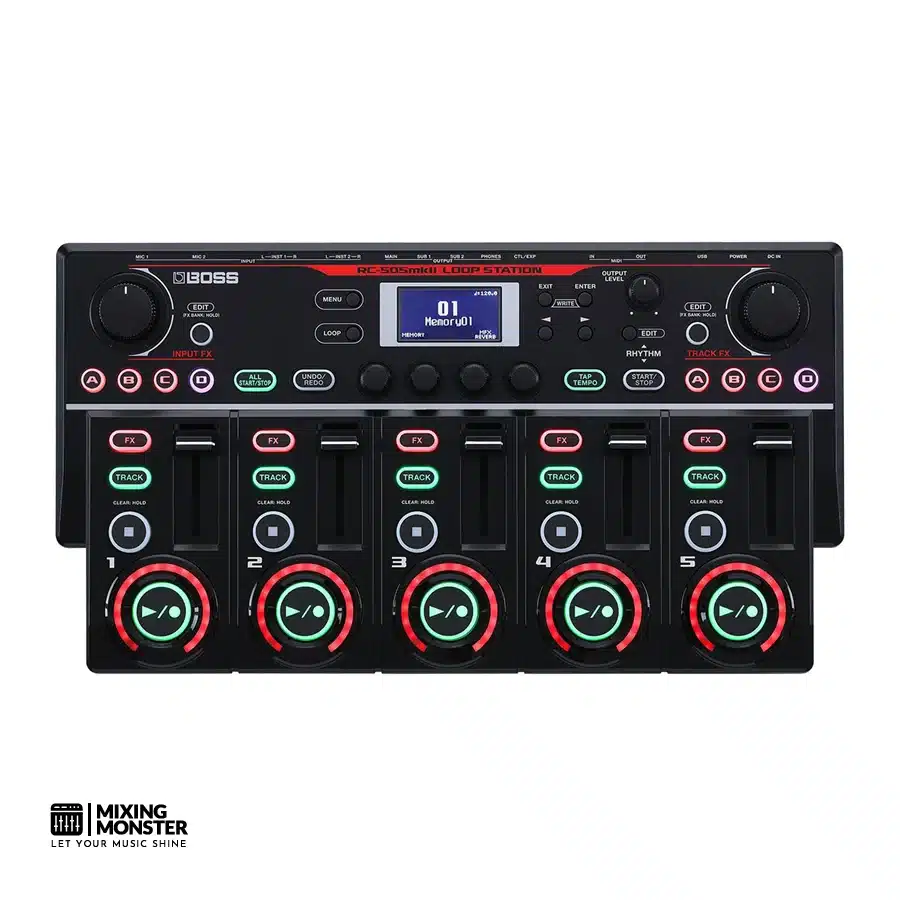
Table Of Contents
1. What Are The Best Voice Processors?
Best Budget Voice Processors
Best Midrange Voice Processors
Best High-End Voice Processors
2. What Is A Voice Processor?
3. Essential Accessories To Complement Your Voice Processor
4. Voice Processor Buying Guide
5. Finding Your Perfect Voice Processor: Key Takeaways
FAQ

1. What Are The Best Voice Processors?
We dug into a range of voice processors to find the most reliable options for different needs. Our picks focus on sound, ease of use, and features that help your vocal performance.
Here’s our list of the best voice processors out there right now.
Here Are Our Picks For The Best Voice Processors:
Best Budget Voice Processors
2. Electro Harmonix Voice Box
Best For Vocal Harmonies And Vocoder Effects
Best Midrange Voice Processors
Best High-End Voice Processors

Best Budget Voice Processors
#1 TC-Helicon Mic Mechanic 2
Best For Simple, Portable Vocal Effects With Reverb, Echo, And Pitch Correction
Overview:
The TC Helicon MIC Mechanic 2 is a compact effects stompbox for singers who want straightforward tools without a steep learning curve. We set it up in minutes, and the controls make sense.
This pedal focuses on reverb, echo, and subtle pitch correction to give vocals a polished edge, but it never sounds too processed. Its battery power option is a nice bonus for mobile setups or small gigs.
Pros:
- Simple interface that’s quick to learn
- Portable design with battery power option
- Natural-sounding reverb and echo effects
Cons:
- Limited effect variety compared to larger processors
- Pitch correction feels basic
- Some users may notice light noise if cables aren’t balanced
Unique Selling Point:
The TC Helicon MIC Mechanic 2 stands out for its balance of simplicity and quality, giving singers essential vocal effects in a compact pedal that doesn’t overwhelm with unnecessary features.
Key Benefits:
- Enhances live vocals with reverb and echo that sound natural on stage.
- Provides pitch correction that helps smooth out minor inaccuracies without being distracting.
- Runs on batteries, which reduces cable clutter and makes it easy to travel with.
Pricing:
| Average Price | ~ $159 |
Review:
When we tried the TC Helicon MIC Mechanic 2, we got it running in seconds. Plug in a mic, twist a couple of dials, and you’re set.
The tactile controls are refreshingly straightforward. We never got lost while dialing in a sound, which is honestly a relief compared to some other gear.
The reverb options stood out. They add just enough depth without drowning the vocal, and the echo sits nicely in a mix if you time it with the tap tempo.
Effects blend smoothly—they don’t feel tacked on or fake. For smaller gigs, our vocals felt more “finished” without needing a sound engineer hovering nearby. Pitch correction here is subtle. It won’t lock you into a note like studio software, but it smooths out little imperfections so live singing sounds more consistent.
If you’re a casual singer or want a little help without that robotic vibe, it’s a handy feature. We also loved the portability factor—running on batteries means fewer cables, which is always a win in cramped rehearsal spaces.
The lightweight build makes it easy to toss in a gig bag, and the metal casing feels tough enough for regular use.
But if you want a vast range of effects, this isn’t the pedal for you. It sticks to a few basics and does them well, but does it also offer advanced layering or wild modulation? Not here.
Using unbalanced cables introduced a bit of hiss, so you’ll want to set things up properly.
The TC Helicon MIC Mechanic 2 is best for singers who want reliable, no-fuss vocal enhancement. It excels in several areas, and if you prioritize portability and ease of use, it’s a wise choice.
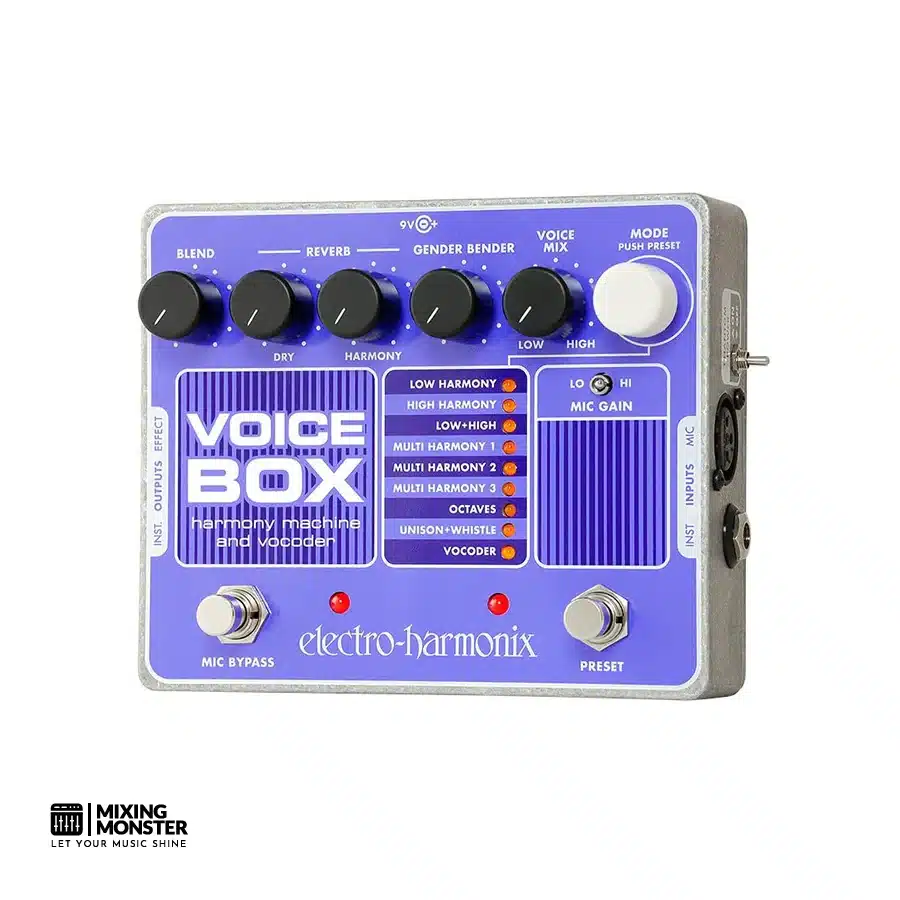
#2 Electro Harmonix Voice Box
Best For Vocal Harmonies And Vocoder Effects
Overview:
The Electro-Harmonix Voice Box is a compact harmony and vocoder pedal for singers and instrumentalists who want to expand their sound. We set it up quickly and liked how it followed both our voice and instrument to create harmonies in real time.
It also comes with reverb and formant controls, so shaping the final sound doesn’t take much effort. The pedal feels sturdy and ready for regular use.
Pros:
- Produces natural-sounding harmonies that blend well with live instruments
- Vocoder mode adds creative, synthetic textures without needing extra gear
- Solid build quality with intuitive controls
Cons:
- Requires playing an instrument for harmony tracking, which may not suit all singers
- Some presets feel less practical in a live mix
- A few users have reported power supply issues
Unique Selling Point:
The Electro-Harmonix Voice Box stands out for its ability to generate 2- to 4-part harmonies that follow both the instrument and the singer, giving us a fuller sound without needing additional vocalists.
Key Benefits:
- Live Performance Enhancement – Adds backup-style harmonies that make a solo performance sound more complete.
- Creative Flexibility – Vocoder and formant controls give us room to experiment with unique tones.
- Practical Build – Compact, durable chassis makes it easy to transport and reliable on stage.
Pricing:
| Average Price | ~ $261 |
Review:
When we first tried the Electro-Harmonix Voice Box, we were surprised by how quickly it tracked our vocals and guitar. The harmonies sounded smooth and natural, especially using the glissando feature—it followed pitch changes seamlessly and felt like having backup singers.
The vocoder mode was a highlight. We got those classic robotic tones with just a few knob tweaks, and it didn’t take long to find a usable sound.
The reverb controls added depth without making things muddy. The pedal doesn’t require much of a learning curve at all.
It works best with a clean instrument signal. If the guitar tone was too distorted, the harmony tracking struggled a bit. Not a dealbreaker, but something to remember if you’re gigging.
Some presets felt more like party tricks than practical tools, but being able to save and recall our settings made it easy to stick with what fit our style.
The pedal feels solid and reliable. We’d take it on the road without a second thought, and the controls are laid out in a way that makes sense mid-performance.
The Electro-Harmonix Voice Box gave us a strong mix of natural harmonies and creative effects. It won’t replace a whole vocal group, but for performers and studio users who want extra depth and texture, it’s a dependable choice.
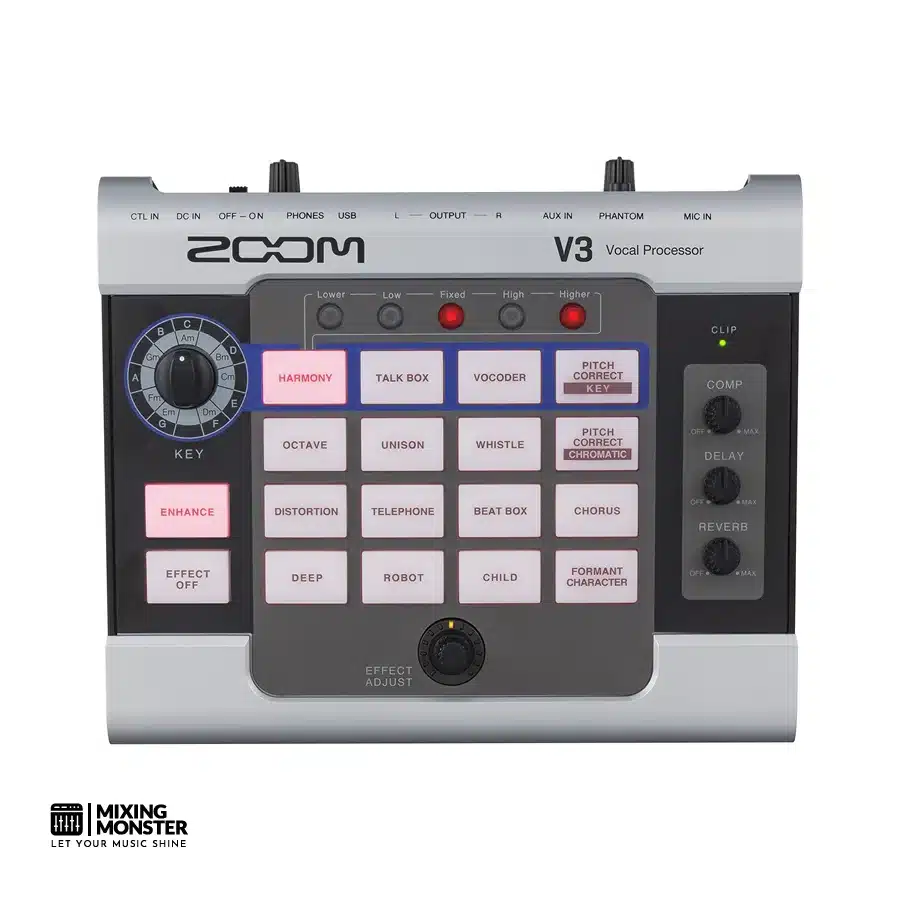
#3 Zoom V3
Best For Simple, Hands-On Vocal Effects And Harmonies
Overview:
The Zoom V3 Vocal Processor gives you a straightforward way to add harmonies, pitch correction, and effects—no deep menu diving required. It’s compact, battery-powered, and fits easily into both live and home recording setups.
We liked experimenting with vocal textures in seconds. It’s not high-end studio gear, but it feels reliable for performers and creators who want instant results.
Pros:
- Easy one-button access to effects—no scrolling through menus
- Lightweight and portable, runs on batteries
- Harmonies sound natural with the correct settings
Cons:
- Pitch correction feels limited unless you’re singing solo
- Plastic build probably won’t survive heavy touring
- Some effects feel more like novelties than pro tools
Unique Selling Point:
The Zoom V3 Vocal Processor stands out for its instant, button-based controls. Switching between harmonies, reverb, and pitch correction mid-performance is effortless.
Key Benefits:
- Quick setup saves time at rehearsals and live shows.
- Built-in harmonies add depth to vocals—no backup singers needed.
- Portable design works anywhere.
Pricing:
| Average Price | ~ $279 |
Review:
First impressions? The Zoom V3‘s layout makes sense. Each function has its button, so we didn’t waste time hunting through menus.
During rehearsal, we could test harmonies and effects on the fly. The harmonies felt smooth, especially when we kept our singing tight with the key.
Pitch correction worked best in small doses—overdoing it made things sound a bit fake. For casual gigs or streaming, it gave us enough polish without going overboard.
Portability is a big win. We ran it on batteries and took it outside the studio. It handled both condenser and standard dynamic mics just fine.
The phantom power option meant we didn’t need extra gear for our condenser microphone.
Some effects felt more playful than professional. The robotic and novelty sounds didn’t fit serious recording sessions, but they might work for creative projects or cosplay.
The build of the Zoom V3 is light—great for carrying around, but not exactly rugged. If you’re gigging hard, you’ll want to treat it gently.
#4 Roland VT-4
Best For Live Performers And Creators Who Want Hands-On Vocal Effects

Overview:
The Roland VT-4 Vocal Transformer is a compact voice processor aimed at performers, streamers, and creators who want fast vocal effects without a fuss. We found it intuitive, with sliders and knobs that respond immediately.
Real-time control is the focus here, which is great for live settings. You won’t find deep editing, but the simplicity makes it approachable.
Pros:
- Easy to operate with hands-on controls
- Wide range of vocal effects for creative use
- Portable size; runs on batteries
Cons:
- Feels less durable than we’d like
- Limited control over effect parameters
- No balanced XLR output
Unique Selling Point:
The Roland VT-4 stands out for its direct, no-menu design. We could tweak vocal effects instantly while performing or recording.
Key Benefits:
- Real-time control makes it easy to adjust pitch, formant, or effects on the fly.
- Battery operation means we can use it anywhere, no outlet needed.
- Built-in effects like vocoder, harmonizer, and reverb give us creative options for different styles.
Pricing:
| Average Price | ~ $299 |
Review:
Testing the Roland VT-4, we immediately noticed the simple layout—no menus—just sliders and knobs for instant effect changes.
We could experiment with harmonies, vocoding, and pitch correction in real time. Setup was a breeze; plug it in and you’re ready to go.
The portability stood out. We ran it on batteries for hours, which is handy for gigs or streaming setups.
The effects sounded solid. We used the harmonizer and vocoder in rehearsal and streaming, and they added depth without drowning out the original vocals.
Pitch correction worked well for quick fixes, though it’s not as detailed as pricier processors. For most live uses, it’s fine.
The build feels light and not super tough. We wouldn’t toss it in a bag unprotected. The lack of XLR outputs makes pro integration trickier, but for casual or semi-pro setups, it’s enough.We sometimes wished for more control over effect parameters.
The simplicity of the Roland VT-4 is a plus for live shows, but in the studio, it can feel limiting.
Best Midrange Voice Processors
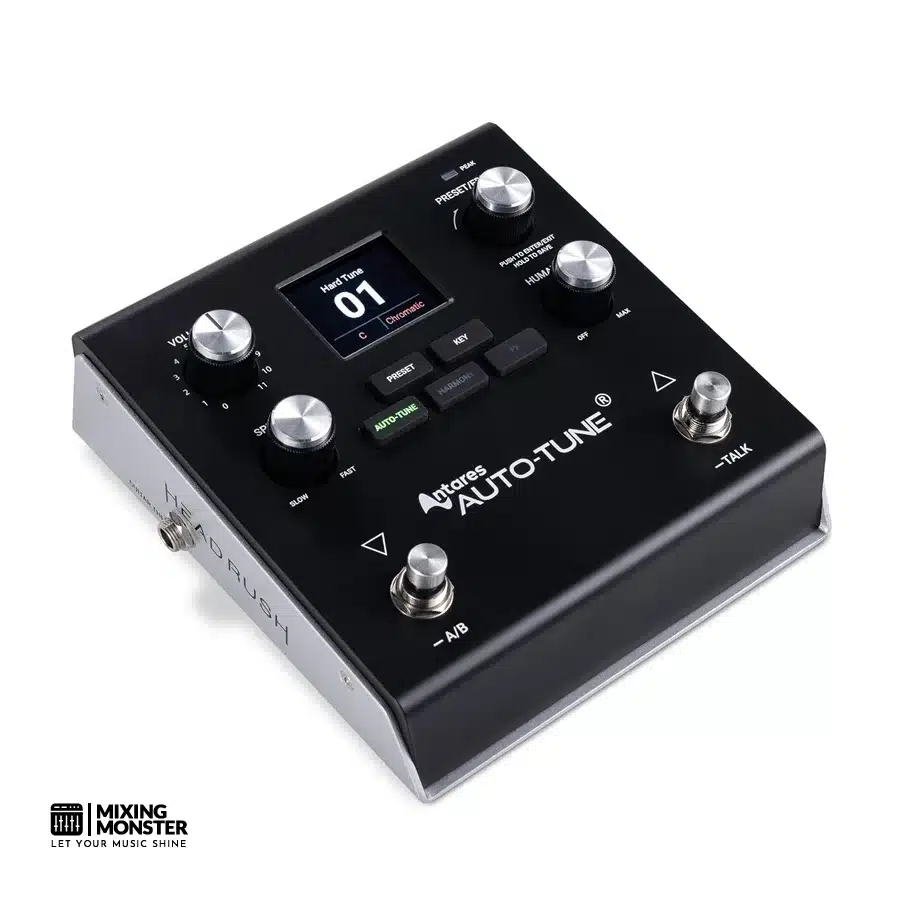
#5 Headrush VX5
Best For Real-Time AutoTune And Live Vocal Processing
Overview:
The HeadRush VX5 gives you pro-level vocal effects and AutoTune for live shows or studio work, no complicated setup needed.
Pros:
- AutoTune works smoothly; you can tweak Retune Speed and Humanize
- Compact design fits easily in any live rig
- Intelligent harmonizer adds depth with guitar or keyboard
Cons:
- Steeper learning curve if you’re new to vocal processors
- No desktop app for deep editing
- Factory presets need some tweaking
Unique Selling Point:
The HeadRush VX5 stands out by packing Antares AutoTune into a pedal. Vocalists get direct control over pitch and harmonies—no software required.
Key Benefits:
- Real-time pitch correction keeps live vocals polished and consistent.
- Built-in effects like reverb and delay mean less extra gear.
- USB audio interface support lets you record straight into a DAW.
Pricing:
| Average Price | ~ $299 |
Review:
When we tried the HeadRush VX5, it slipped into our setup almost instantly. The pedal hooked up easily to both mic and guitar, and within minutes, we were testing harmonies and dialing in pitch correction.
The interface felt intuitive after a little poking around. The display is clear, and the two footswitches make quick work of toggling effects.
AutoTune sounded natural unless we cranked it to extremes. The Humanize knob helped us keep things subtle for acoustic sets, but when we wanted that modern, hard-tuned sound, it delivered.
The harmonizer shone with guitar chords. It tracked well and added believable backing vocals in real time, making solo sets feel much bigger.
The reverb and delay weren’t just add-ons—they sounded clean and worked great on stage.
The preset system could use some love. The stock sounds didn’t fit our style, so we spent time tweaking. Once dialed in, saving and recalling them was quick, but we wished for a desktop editor to speed up the process.
As a USB audio interface, the VX5 made recording vocals straight into our DAW easy. Latency was low enough for comfortable tracking, which is a relief.
After more use, we found the HeadRush VX5 reliable and flexible. Singers who want hands-on AutoTune and effects without software will like it. For us, the combo of live and studio features makes it a solid addition to any vocalist’s kit.
#6 TC-Helicon Perform-V
Best For Singers Wanting Simple, Polished Live Vocals

Overview:
The TC Helicon PERFORM-V gives singers a super easy way to get a clean, professional vocal sound—no racks of gear required. We set it up in a snap, and its clip-on mic stand design makes it a breeze to reach during a set.
The tone shaping feels natural, and the anti-feedback protection is a lifesaver on loud stages. If you want more sounds, you can beam new presets from your phone—handy, and honestly, not as complicated as it sounds.
Pros:
- Super simple with hardly any setup
- Clips right onto your mic stand—no fuss
- Presets expand easily via smartphone
Cons:
- Not as much control as pricier processors
- Preset transfer with the app can feel awkward
- Small buttons are tough to see in dark venues
Unique Selling Point:
The TC Helicon PERFORM-V stands out because it combines adaptive vocal processing with a direct mic-stand mount. You can tweak effects in real time, right in the thick of a performance, without losing your flow.
Key Benefits:
- Adaptive EQ and compression balance vocals automatically, so you don’t have to fiddle with knobs all night.
- Anti-feedback keeps those nasty squeals at bay on stage.
- Smartphone integration lets you add new sounds fast, no extra gear needed.
Pricing:
| Average Price | ~ $329 |
Review:
When we tried out the TC Helicon PERFORM-V, it slid into our setup almost instantly. Mounting it on the mic stand kept it right at our fingertips, and the straightforward buttons meant we didn’t get stuck in menus.
The built-in vocal polish is subtle but does the trick. Adaptive EQ and compression brought out more clarity without making things sound fake or overdone.
Automatic mic gain adjustment helped us avoid level mismatches between different singers. We liked not having to worry about that.
On stage, the anti-feedback feature gave us a lot more confidence. We cranked the volume higher than usual, and it mostly managed to keep things in check. It’s not magic, but it’s better than a lot of other stuff we’ve tried.
Beaming extra presets from a phone was an incredible bonus. The transfer process wasn’t always smooth, but once the new effects loaded, things like harmonies and complex tuning gave us more options without needing another box.
The TC Helicon PERFORM-V feels light but sturdy. It doesn’t seem fragile, and the dimmable buttons are easy to spot under stage lights. For quick gigs, it’s nice knowing you can grab it and go.
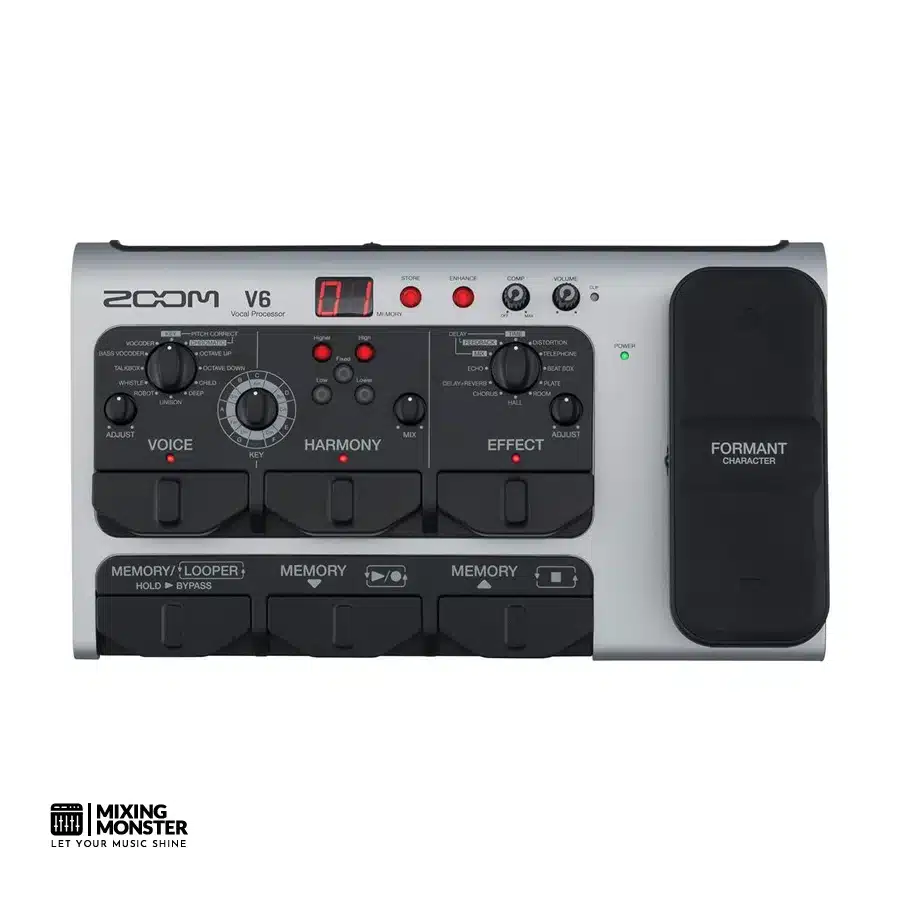
#7 Zoom V6 SP
Best For Live Singers Wanting Real-Time Vocal Effects
Overview:
The Zoom V6-SP Vocal Processor is for performers who want more control over their sound. It combines harmony, effects, and looping in one box, giving us plenty of flexibility for both stage and practice.
It’s not a studio replacement, but it packs enough features to make live vocals way more interesting.
Pros:
- Layer harmonies easily—no tech headaches
- Looper adds creative options for solo acts
- Formant pedal changes your vocal character on the fly
Cons:
- Feels a bit flimsy for the price
- Some effects sound too artificial for pro gigs
- Controls can be touchy and complex to dial in just right
Unique Selling Point:
The real kicker of the Zoom V6-SP is the formant shift pedal. You can change your vocal tone instantly, without messing with pitch—a nifty trick for singers who want to play around with their sound during a set.
Key Benefits:
- The looper lets us stack layers live, which is fantastic for solo performers.
- Harmony features make vocals sound bigger, no backup singers required.
- Preset patches mean we can swap effects fast during a show.
Pricing:
| Average Price | ~ $369 |
Review:
When we first plugged in the Zoom V6-SP, setup was a breeze. We started playing with effects in just a few minutes, and the harmony section immediately gave our vocals a fuller, natural sound in a live mix.
The looper stood out for building layers in stripped-down acoustic sets. It’s not the fanciest looper ever, but for a few vocal layers, it works with no lag.
Some effects are synthetic. The harmonies blend well, but particular distortion and modulation patches felt rough around the edges. We ended up picking and choosing what worked best for each song.
The formant pedal is genuinely fun. Shifting your tone on the fly adds some spice to performances, though it does take a little practice to control. Sometimes it feels more like a party trick than something you’d use every song.
The build of the Zoom V6-SP is lighter than we expected. It’s portable, but doesn’t feel as tough as some pedals we’ve hauled around. For studio use or local gigs, it’s fine, but we’d be careful with it on the road.
#8 Boss VE-8 Acoustic Singer
Best For Acoustic Performers Who Want Simple, All-in-One Processing

Overview:
The Boss VE-8 Acoustic Singer integrates vocal effects, guitar processing, and looping into a single pedal. We set it up quickly and started layering harmonies and loops right away in practice.
Pitch correction feels subtle, and the harmonies follow your playing without sounding robotic. If you’re gigging solo, this pedal can cut down on the clutter.
Pros:
- Small and portable, handles both vocals and guitar
- Harmonies sound natural and track guitar chords
- Looper is handy for building live layers
Cons:
- Looping time is short compared to big loopers
- Menus feel a bit old-school
- Some effects need tweaking to sit right in the mix
Unique Selling Point:
The Boss VE-8 Acoustic Singer puts vocal harmonies, pitch correction, guitar effects, and looping all in one pedal. You get more space on your board and less to haul around.
Key Benefits:
- Handles guitar and vocals together, so setup is faster.
- Real-time harmonies boost solo sets—no extra singers needed.
- The looper lets us fill out arrangements right there on stage.
Pricing:
| Average Price | ~ $417 |
Review:
Plugging into the Boss VE-8 Acoustic Singer, we noticed right away how simple everything felt. Controls are straightforward, and we didn’t need the manual to get a decent sound.
Within minutes, we had reverb on vocals, resonance on guitar, and a loop going. The harmonies sound natural and follow guitar chords easily. Pitch correction is gentle—it helps but doesn’t make you sound like a robot.
The doubling effect adds more body to vocals. On the guitar side, Acoustic Resonance warmed up our pickup tone. Reverb and chorus are straightforward but do the job, and feedback control works when things get loud.
The looper is functional for solo acts, though 80 seconds isn’t much if you’re used to bigger loopers. Still, for quick rhythm and vocal lines, it’s enough. We liked being able to switch between guitar and vocal loops separately.
The Boss VE-8 Acoustic Singer is compact and light—easy to toss in your gig bag. Running on batteries is a nice touch for busking or rehearsals when you can’t find an outlet.
Best High-End Voice Processors
#9 Boss VE-500 Vocal Performer
Best For Guitarists Who Need Seamless Vocal Effects On Stage
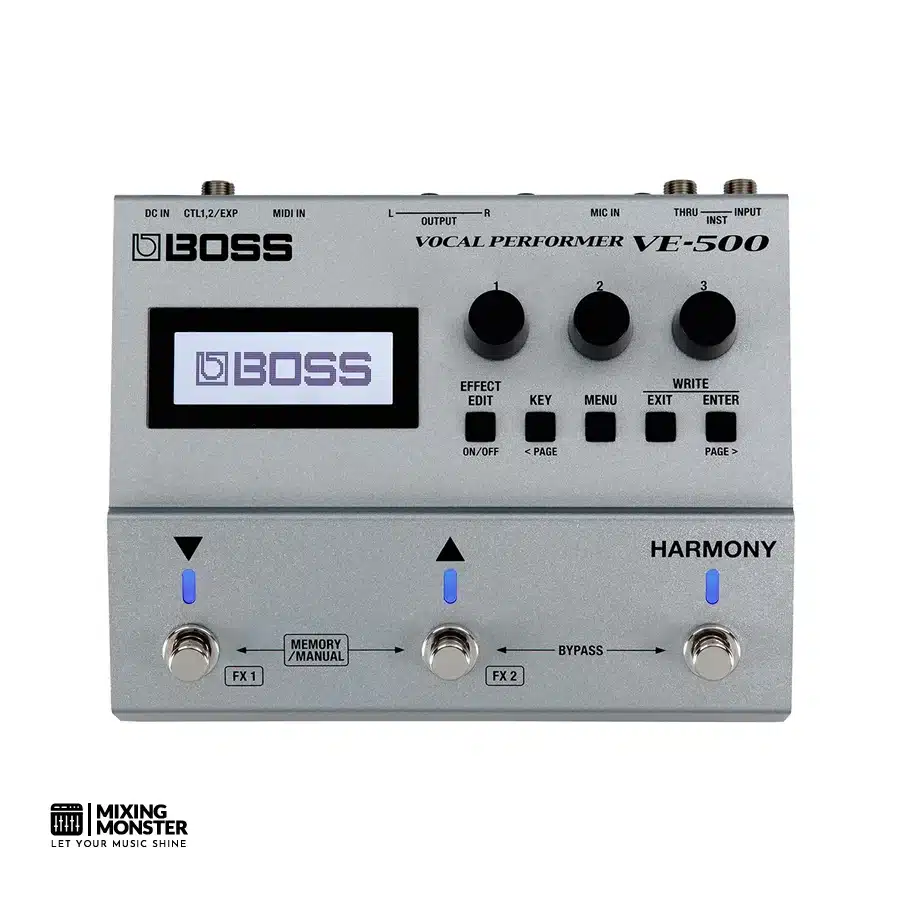
Overview:
The Boss VE-500 Vocal Performer packs advanced vocal processing into a compact stompbox. It fits right onto a pedalboard without any fuss.
We got it up and running with our guitar rig and controlled harmonies and effects ourselves—no sound engineer required. The build feels sturdy in hand, and the effects range from simple polish to lush, layered harmonies.
Learning the unit took a while, but the flexibility pays off for live performers who want control.
Pros:
- Compact design integrates easily with pedalboards
- Wide range of vocal effects and harmonies
- Solid construction built for stage use
Cons:
- Steeper learning curve for beginners
- Interface feels dated compared to newer units
- On-the-fly adjustments can be tricky
Unique Selling Point:
The Boss VE-500 stands out by combining vocal harmonies, pitch correction, and multi-effects in a pedalboard-friendly box. Guitarists can finally control their vocals on stage without extra help.
Key Benefits:
- We can create harmonies that follow our guitar chords.
- It gives us effects that make vocals sound better—no extra processors needed.
- We don’t need to rely on anyone else to manage our vocal sound at gigs.
Pricing:
| Average Price | ~ $463 |
Review:
Setting up the Boss VE-500 felt refreshingly simple. It slid right onto our pedalboard, and the controls felt familiar if you’ve ever used guitar pedals.
The solid build inspired confidence. It could handle plenty of gigs and the occasional knock.
We experimented with the harmonizer and found it did a good job tracking our guitar chords. The harmonies sounded convincing—never too robotic, as long as we kept things subtle.
Pitch correction and EQ came in handy fast. They helped us clean up vocals, especially in rehearsal spaces with rough acoustics.
The effects section is deep. We tried reverb, delay, and a few modulation tricks, and didn’t feel like we needed to haul extra gear to get a polished sound.
Everything in one box made setup less of a headache and meant we carried less stuff to gigs.
The interface, though, tested our patience. Menu-diving during practice wasn’t a big deal, but we wouldn’t want to tweak things mid-song on stage. We had to set up presets ahead of time to avoid scrambling for the right sound.
Still, once we dialed in our workflow, the Boss VE-500 gave us reliable results. It shone in smaller venues where we didn’t have a dedicated sound engineer. Having vocal control under our feet just made the shows smoother.
#10 TC-Helicon VoiceLive 3 Extreme
Best For Singers And Guitarists Who Want Integrated Effects And Backing Tracks

Overview:
The TC Helicon VoiceLive 3 Extreme puts vocal and guitar effects into one floor pedal. We found it handy for switching between singing and playing—everything just worked together.
It comes with looping, automation, and even recording features. The design feels aimed at live gigs and practice alike, though you’ll need some patience to learn it all.
Pros:
- Wide range of vocal and guitar effects in one unit
- Backing track integration keeps performances smooth
- USB recording makes it easy to capture live sessions
Cons:
- Steeper learning curve for new users
- No built-in setlist organization feature
- Occasional reliability concerns with power and support
Unique Selling Point:
The VoiceLive 3 Extreme doesn’t just process vocals—it adds pro-level guitar effects and lets us sync backing tracks and automation. That hands-free setup is a game-changer for many performers.
Key Benefits:
- We can process both guitar and vocals with one device, which makes life easier on stage.
- Backing tracks and effects automation keep our set flowing without extra button-mashing.
- Direct-to-USB recording means we can capture ideas—or even entire shows—on the fly.
Pricing:
| Average Price | ~ $485 |
Review:
Our first time with the VoiceLive 3 Extreme, we noticed how much gear it replaced. No more juggling a mess of pedals and processors—just one box, and we were good to go.
The setup was quicker, and we had more room on stage, which is always a plus.
The vocal effects impressed us. Harmonies stayed tight if we sang in tune, and the tone controls added presence without that weird “processed” vibe. We had to tweak things a bit before it felt right, but once we got there, it worked across a bunch of different songs.
Guitar effects felt solid, too. The amp models sounded beefy enough, and we could flip between clean and crunchy tones easily. It won’t replace a dedicated amp, but for mixed sets, it does the trick.
The looper and automation features of the VoiceLive 3 stood out. We could trigger backing tracks and have effects change automatically, which meant less pedal-tapping and more focus on playing and singing.
But there’s a learning curve here. We spent a lot of time poking around menus and figuring out what each one did. Organizing longer sets felt clunky without a setlist feature, and we’ve seen some chatter about power hiccups—though ours worked fine.
#11 Boss RC-505 MKII
Best For Live Looping And On-The-Spot Music Creation
Overview:
The Boss RC-505 Mk2 Loop Station is a tabletop looper built for hands-on performers. Five stereo tracks, onboard effects, and flexible routing give it plenty of depth for advanced users, but it’s still friendly enough for beginners.
We found it helpful both on stage and in the studio. It does take a little time to master, though.
Pros:
- Five independent stereo tracks allow creative layering
- Onboard effects add variety without external gear
- Compact tabletop design keeps everything within reach
Cons:
- The plastic build feels less durable than expected
- Learning curve can be steep for beginners
- Some users may prefer DAW-based workflows
Unique Selling Point:
The RC-505 Mk2 lets us run five stereo loops at once and control input and track effects directly. That’s rare in a tabletop looper.
Key Benefits:
- We can build complex arrangements with multiple looping tracks—no extra gear needed.
- Input effects let us shape vocals or instruments on the spot.
- Customizable controls help us perform live without getting lost in menus. Live performance feels smoother.
Pricing:
| Average Price | ~ $659 |
Review:
When we set up the RC-505 Mk2, the layout made sense right away. With all the looping and effects controls within reach, we started layering simple loops in minutes.
The workflow encouraged us to experiment. Five stereo tracks gave us room to stack harmonies or build beats without running out of space.
Sound quality held up nicely. The onboard effects, like filters and delays, added character without needing extra pedals.
Having both XLR and line inputs meant we could quickly switch between mic and instruments. That’s handy for testing or live sets.
The plastic build, though, left us underwhelmed. It’s lightweight and easy to carry, but we’d feel nervous tossing it around on the road.
The learning curve is real. We got basic loops going quickly, but unlocking all the features took time and a few trips through the manual.
Still, the RC-505 Mk2 is a dedicated looper through and through. It’s built for performers, beatboxers, and vocalists who want to create on the fly.
If you’re serious about looping, this machine rewards you for putting in the time. It’s not flawless, but it lands in a sweet spot between approachability and depth.

2. What Is A Voice Processor?
A voice processor is an audio device or software tool that changes and enhances the human voice. We use it to tweak tone, clarity, dynamics, and effects, either live or after recording.
These processors usually bundle several functions together, like equalization (EQ), compression, pitch correction, and reverb. With these tools, we can shape a voice for different recording setups or live shows.
Think of a voice processor as a control center for vocals. Instead of juggling multiple gadgets, we manage everything through a single device or software.
Common features include:
- Noise reduction to cut background sounds
- De-essing for taming harsh “s” noises
- Pitch shifting for tuning or creative twists
- Harmonizing to stack extra vocal layers
Studios, broadcast rooms, and live stages all use voice processors. They help us maintain consistent sound quality and provide us with the flexibility to experiment with various vocal styles.
| Feature | Purpose | Example Use Case |
|---|---|---|
| Compression | Controls volume peaks | Live singing performance |
| EQ | Adjusts frequency balance | Podcast voice clarity |
| Reverb/Delay | Adds space and depth | Studio recording sessions |
| Pitch Correction | Keeps vocals in tune | Pop music production |
Voice processors give us tight control over vocal sound, whether we’re making music, streaming, or recording spoken word.

3. Essential Accessories To Complement Your Voice Processor
Using a voice processor becomes significantly easier with the right accessories. Even small add-ons can improve recording quality and make live sessions smoother.
A high-quality microphone comes first. No processor can fix a bad input, so picking a mic that fits your voice and room matters.
A pop filter or windscreen helps too. It eliminates plosives and extra noise before the sound even reaches the processor. That little bit of prevention can save a lot of headaches.
A sturdy microphone stand keeps things steady. Adjustable stands let us place the mic just right and avoid handling bumps.
For listening, closed-back headphones or in-ear monitors give us an honest picture of our processed vocals. That way, we can make tweaks on the fly.
Here’s a quick table of common accessories:
| Accessory | Purpose | Benefit |
|---|---|---|
| Microphone | Captures voice | Clean input signal |
| Pop Filter/Windscreen | Reduces plosives/noise | Clearer recordings |
| Mic Stand | Holds microphone securely | Stable positioning |
| Headphones/Monitors | Provides accurate monitoring | Real-time sound adjustments |
Don’t forget about cables and power supplies. Good cables prevent dropouts, and a reliable power source keeps the processor running without hiccups.
4. Voice Processor Buying Guide
When picking a voice processor, we should focus on features that fit our workflow. The best choice depends on whether we’re recording in the studio, performing live, or streaming.
Sound quality is a big deal. Clean signal processing and low noise keep our voice sounding real and clear.
We also want to look at effects and presets. If flexibility matters, it’s smart to find processors with adjustable reverb, delay, pitch correction, and harmony options.
Connectivity can make or break a setup. We need to check for the right inputs and outputs—XLR, USB, MIDI—so everything fits together without drama.
Here’s a comparison table of features to keep in mind:
| Feature | Why It Matters | What to Look For |
|---|---|---|
| Sound Quality | Ensures clarity and accuracy | Low noise, high-resolution audio |
| Effects | Expands creative options | Adjustable reverb, delay, harmony |
| Controls | Improves usability | Simple interface, clear display |
| Connectivity | Supports different setups | XLR, USB, MIDI compatibility |
| Portability | Useful for travel or live shows | Compact size, durable build |
Ease of use matters, too. If the controls are intuitive, we spend less time fiddling and more time creating.
And let’s be honest—budget and durability always play a part. We want something that lasts but doesn’t break the bank.
5. Finding Your Perfect Voice Processor: Key Takeaways
We need to match a voice processor’s features to our actual workflow. Studio folks may want advanced EQ and compression, while live performers usually care more about reliability and quick controls.
Form factor is worth thinking about. Rack units offer more connections, whereas desktop units are more accessible. Portable processors? Super handy for mobile recording or streaming.
Price and value—yeah, they’re essential. Spending more doesn’t always mean better results, especially if we need the basics. Sometimes a simple processor with a solid preamp and light effects does the trick.
Key factors to compare include:
- Connectivity: XLR, USB, or digital I/O
- Effects: Compression, EQ, pitch correction, reverb
- Ease of Use: Menu layout, controls, presets
- Durability: Build quality for travel or studio use
| Feature | Why It Matters | Example Use Case |
|---|---|---|
| Connectivity | Ensures compatibility | USB for streaming setups |
| Effects | Shapes and enhances vocal tone | Reverb for live performance |
| Ease of Use | Saves time during sessions | Quick presets for podcasts |
| Durability | Withstands frequent transport | Touring musicians |
Our Top Picks For The Best Voice Processors
Best Budget Voice Processors
- TC-Helicon Mic Mechanic 2
- Electro Harmonix Voice Box
- Zoom V3
- Roland VT-4
Best Midrange Voice Processors
- Headrush VX5
- TC-Helicon Perform-V
- Zoom V6 SP
- Boss VE-8 Acoustic Singer
Best High-End Voice Processors
- Boss VE-500 Vocal Performer
- TC-Helicon VoiceLive 3 Extreme
- Boss RC-505 MKII

FAQ
1) What features should I look for in a vocal processor for live performances?
We go for strong preamps, solid pitch correction, and controls that are easy to use. A clear display and footswitches make on-stage adjustments way less stressful.
2) Which vocal effects are primarily used in a voice processor?
Reverb, delay, and compression are everywhere. Pitch correction and harmony are frequently used in both live gigs and studio sessions.
3) How does a vocal effects pedal enhance studio recording quality?
It lets us capture processed vocals in real time, so we don’t have to fix everything later. That means more consistent tone and faster creative decisions.
4) What are the benefits of using a vocal processor with built-in harmony effects?
Built-in harmony effects let us stack layered vocals without needing backup singers. It adds depth and texture to live sets and recorded tracks.
5) Can you recommend a durable vocal processor for touring musicians?
We usually suggest the TC-Helicon VoiceLive 3 Extreme and Boss RC-505. Both hold up well on the road and keep working gig after gig.
6) What are the differences between the Boss VE-500 and the TC Helicon VoiceLive 3 vocal processors?
The Boss VE-500 brings a compact design. It delivers solid harmony and pitch correction features—TC Helicon’s VoiceLive 3 packs in more effects and looping options. You also get guitar integration, making it a better choice if you’re juggling multiple instruments.
Related Articles




Featured


You Might Also Be Interested In